755 nm wavelength
Commonly used for suitable lighter skin tones and pigmented hair. This wavelength efficiently targets melanin within the hair follicle.
Smoother skin, less shaving, and lasting hair reduction with our Cynosure Elite+ dual-wavelength laser.
Explore our gallery of before-and-after results from treatments performed at Cosmetica Medical Clinic.
VIEW BEFORE & AFTER GALLERYAt Cosmetica Medical Clinic, laser hair removal helps reduce unwanted hair on the face and body by delivering carefully controlled light energy to pigmented hair follicles. Over a series of sessions, many patients notice less regrowth, finer hair, and smoother-feeling skin.
We use the Cynosure Elite+, a professional dual-wavelength laser that allows our team to tailor treatment to different skin tones, hair characteristics, and body areas. Your treatment plan begins with an individual skin and hair assessment.
BOOK NOWOur Cynosure Elite+ is a medical-grade laser system designed for long-term hair reduction. Unlike a one-setting approach, its two laser wavelengths give our providers flexibility to personalize care for a broad range of skin types.
Commonly used for suitable lighter skin tones and pigmented hair. This wavelength efficiently targets melanin within the hair follicle.
Offers a treatment option for deeper skin tones because the longer wavelength interacts differently with skin pigment. Settings are selected after a professional assessment.
Cold-air cooling can help make treatment more comfortable and protect the skin surface. You may still feel brief warmth or a snapping sensation during pulses.
Elite+ is designed for a wide range of skin types, but suitability and settings depend on skin tone, tanning history, hair color, medications, and other individual factors. Laser hair removal is not equally effective on every hair color.
Gradually reduce unwanted hair growth and the time spent shaving or waxing.
Reducing hair growth can also help minimize shaving-related bumps and ingrown hairs.
Target pigmented hair follicles while selecting settings appropriate for the treatment area and skin.
Many patients notice softer regrowth and smoother-feeling skin as their treatment series progresses.
Laser hair removal can be customized for many areas of the face and body. Common treatment areas include:
Full face, upper lip, chin, sideburns, jawline, and neck.
Underarms, upper arms, forearms, hands, and fingers.
Full legs, upper or lower legs, knees, feet, and toes.
Bikini line, Brazilian, and other eligible intimate areas.
Chest, abdomen, stomach line, shoulders, upper back, and lower back.
Interested in treating multiple areas? Ask about a personalized full-body laser hair removal plan.
Explore treatment sizes, packages, and current pricing on our Pricing page.
We review your skin tone, hair type, treatment goals, medical history, and sun exposure to determine whether laser treatment is appropriate.
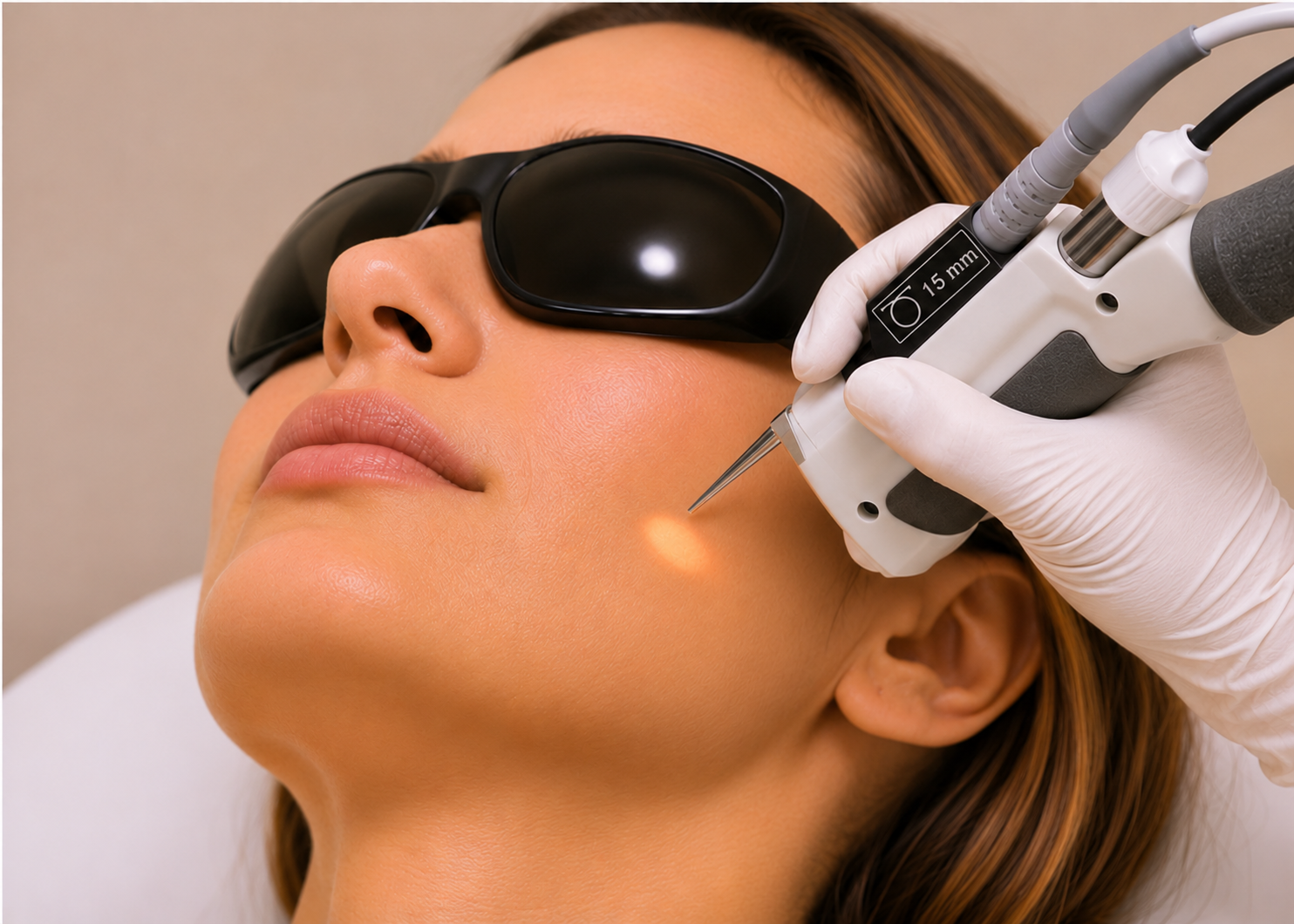
After preparing the skin and providing protective eyewear, your provider treats the selected area with laser pulses. Session length depends on the area. Some discomfort is possible, but cooling can help.
We typically recommend approximately 8 sessions, generally spaced 4–6 weeks apart, depending on the area and hair-growth cycle. Because not all hair follicles are active at once, multiple visits are needed for fuller results. Maintenance sessions may be helpful.
Many patients begin noticing results after their very first session, with some treated hairs shedding over the following days to weeks. The degree of reduction varies, and results become more noticeable with additional sessions. Results vary with hair color, hormones, skin type, and treatment area. The goal is long-term hair reduction, not a guarantee that every hair will disappear permanently.
Avoid tanning and significant sun exposure; tell us about recent sunless tanner, medications, or skin changes. Shave the treatment area as directed, usually the day before. Avoid waxing, plucking, or threading during your treatment series because the follicle must remain available for laser targeting.
Temporary redness, warmth, or mild swelling around follicles is common. Follow your provider’s instructions, avoid excess heat and friction while skin is sensitive, and protect treated skin from the sun. Contact us if you develop blistering, significant pain, or unexpected skin changes.
Possible risks include burns, pigment changes, blistering, and rarely scarring. Treatment may need to be postponed for recent tanning or other skin-related concerns. A consultation helps us choose an appropriate plan.